

The Cost of Professional Reinvention
Modern work increasingly requires continuous reinvention as professionals struggle to stay recognizable inside rapidly shifting systems and expectations.

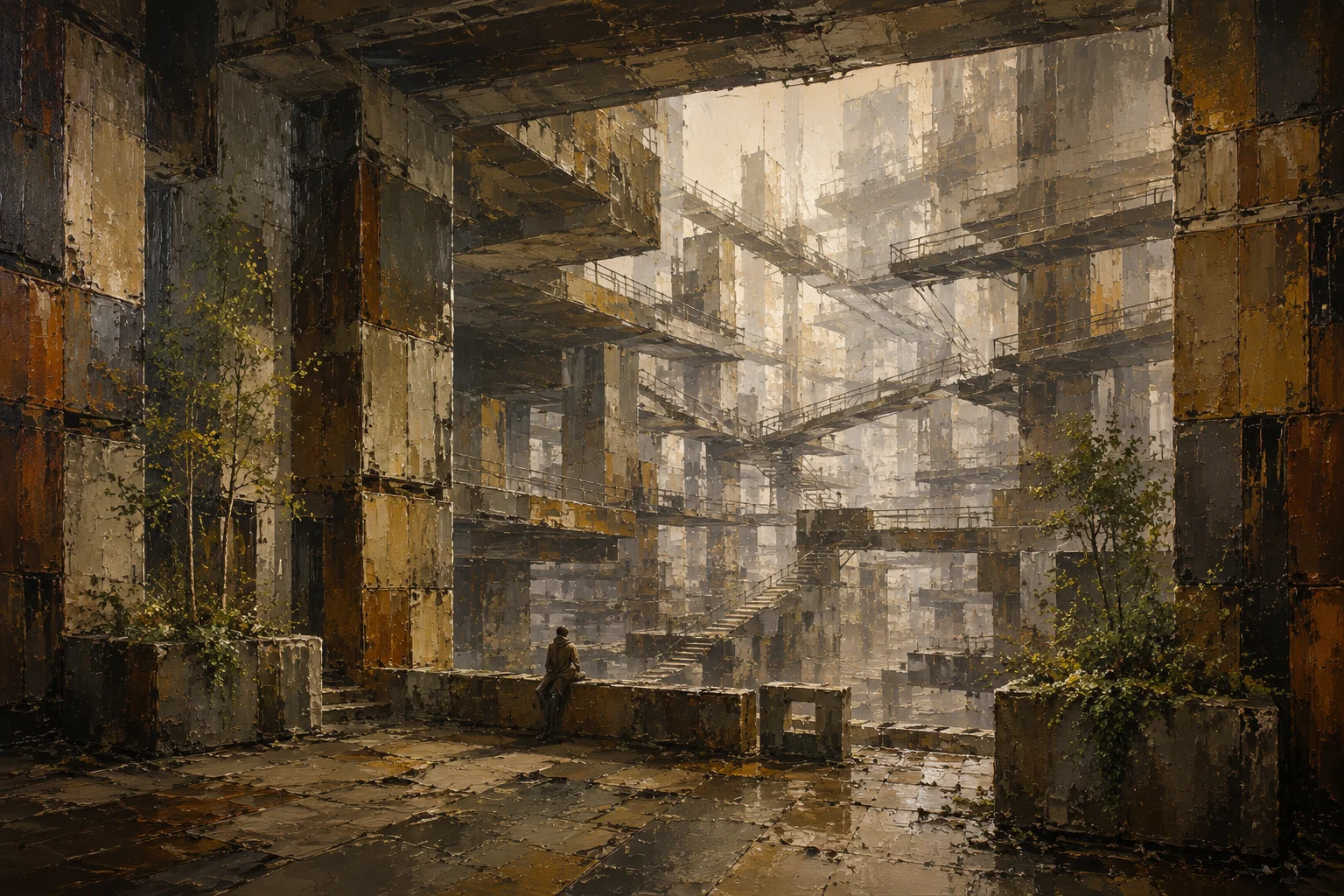
Reinvention Became Part of the Job
A lot of people no longer feel like they are building a career. They feel like they are trying to stay professionally recognizable in systems that keep changing the rules underneath them.
The pressure rarely arrives all at once. It shows up gradually through small adjustments that eventually become constant. Someone updates their LinkedIn profile because their industry suddenly adopted new language around AI. Another rewrites a resume to sound more aligned with modern hiring systems even though the underlying experience itself has not changed. A worker learns another platform because the workflow they mastered a few years ago is already being replaced.
Over time, adaptation stops feeling temporary. It becomes part of the job itself.
Reinvention used to happen at clear moments in a career. A promotion. A layoff. A major career pivot. Most people expected long stretches of continuity between those transitions. You learned your environment deeply enough that eventually your professional identity felt stable.
Modern work no longer creates that kind of stability very easily. Many professionals now operate inside environments where technologies shift, expectations evolve, and entire functions reorganize before people have fully processed the previous change. The pressure is no longer simply to improve over time. It is to remain continuously adjustable.
That sounds reasonable when discussed abstractly. Living inside it feels very different.
Why So Many Professionals Feel Unsettled
Many workers are exhausted in ways that traditional burnout language does not fully explain. They are still capable, productive, and functioning at a high level. From the outside, their careers may even appear successful.
Yet underneath the activity sits a quieter instability. A lot of people feel like they are never fully allowed to arrive anywhere professionally before the environment changes again.
The problem is not only workload. It is the constant reinterpretation of value.
Someone spends years building expertise, confidence, and professional judgment only to realize the market suddenly evaluates those skills through a different lens. Experience that once felt highly valuable now requires reframing just to remain visible. Skills developed carefully over years must constantly be translated into newer terminology to remain legible inside hiring systems, corporate restructuring, or technology-driven workflows.
People are adapting faster than they are integrating.
That has a real psychological cost because people need some degree of continuity in order to maintain a stable sense of identity. Endless adaptation without enough time for integration eventually leaves people feeling fragmented. Someone can become significantly more skilled over time while simultaneously feeling less grounded professionally.
A surprising amount of modern career anxiety comes from that contradiction.
Growth And Survival Started Feeling Similar
Real growth usually accumulates gradually. You learn something deeply, apply it repeatedly, and develop judgment through experience. Confidence forms because the foundation underneath your work remains stable long enough for meaning to develop around it.
Modern reinvention often feels different. At times it feels less like growth and more like professional repackaging.
A worker may spend years becoming highly effective in one environment only to discover the surrounding system no longer values the same capabilities in the same way. The underlying skill still matters, but now the person must reposition their entire professional narrative to remain visible to recruiters, employers, or algorithmic systems screening for different signals.
The pressure quietly shifts from building to continuously re-explaining yourself.
That distinction matters more than most career conversations acknowledge. People can adapt remarkably well, but people still need continuity somewhere underneath the adaptation. Without it, professional reinvention slowly starts turning into identity instability.
Flexibility Quietly Became Survival
Modern professional culture praises adaptability almost constantly. Workers are told to stay agile, keep learning, move quickly, and continuously evolve alongside technology.
Some of this advice is legitimate. AI really is reshaping industries at a pace previous generations never experienced. Entire workflows are changing in real time. Roles are becoming more fluid. Companies are reorganizing around technologies that barely existed a few years ago.
But, there is another side to this conversation that rarely gets discussed honestly.
Systems that require continuous reinvention also create continuous instability.
The modern labor market increasingly rewards workers who can absorb change quickly and shift directions without much friction. From an organizational standpoint that makes sense. Companies benefit from flexibility. Markets reward efficiency. Technology compresses adaptation cycles.
Psychologically, however, the experience can become exhausting when workers begin feeling like every part of their identity must remain market-adjustable all the time. A person can become highly employable while quietly becoming disconnected from themselves.
People are not software updates.
The Pressure Became Public
Part of what makes modern professional reinvention so draining is that it increasingly happens in public. Previous generations could evolve more quietly through resumes, interviews, and local professional relationships. Today many workers maintain visible professional identities continuously across platforms that never really turn off.
LinkedIn profiles evolve constantly. Headlines change. Skills sections shift. Entire professional narratives get rewritten every time the market adopts a new vocabulary or a new technology reshapes expectations.
That creates a hidden layer of labor most people rarely talk about directly. Professionals are not only doing the work anymore. They are also continuously managing how the work gets interpreted by changing systems.
Someone finishes a major project and immediately feels pressure to turn it into visibility. Another person watches their industry suddenly adopt AI language and feels behind despite years of meaningful expertise. A worker updates their profile repeatedly, not because they became a different person, but because the market changed the language required to describe them.
Visibility without continuity eventually becomes exhausting.
Especially when the systems rewarding visibility also reward constant novelty.
The Idea Of “Arriving” Started Disappearing
For a long time, careers operated around an invisible assumption that eventually you would arrive somewhere stable. You would gain enough expertise, enough credibility, and enough seniority that your professional identity would feel settled. Learning would continue, but the foundation underneath your work would remain recognizable.
That version of work belonged to a slower economy.
Today, many careers feel more like ongoing reconstruction projects. The learning never fully stops and the repositioning never completely ends. Even experienced professionals often feel pressure to continuously reinterpret themselves against changing technologies, shifting hiring expectations, and evolving market narratives.
This is not entirely negative. Continuous learning can keep people adaptable and intellectually engaged. Reinvention can create opportunities older systems never allowed.
But, adaptation without enough stability underneath it eventually wears people down.
The pressure to reinvent does not affect every worker equally. Updating skills inside an existing profession feels very different from dismantling an identity built over decades. A true career reinvention often involves periods where accumulated credibility stops transferring cleanly. Income becomes uncertain. Confidence drops. Someone who once felt highly capable suddenly becomes a beginner again in rooms that no longer recognize their previous expertise. From the outside, reinvention culture often looks exciting and empowering. Living through it can feel disorienting, lonely, and psychologically expensive in ways most professional advice barely acknowledges.
People evolve best when growth has something solid to attach itself to.
The System Rewards Fragmentation Before It Punishes It
One of the hardest parts about modern work is that fragmentation often looks rewarded before its costs become visible.
The constantly available employee appears committed. The endlessly adaptable worker appears resilient. The person always learning something new appears ambitious and engaged. For a while these behaviors genuinely create momentum and professional opportunity.
Then eventually many people realize they spent years optimizing for external relevance while slowly losing internal coherence. Every industry shift starts creating anxiety. Every technological change begins feeling existential. Every slowdown feels personal because identity itself became too connected to remaining professionally current at all times.
A lot of modern exhaustion comes from that condition. Not necessarily from working harder than previous generations, but from never fully stabilizing psychologically inside systems that continuously reinterpret value.
Stability Has To Move Deeper
Older career systems placed much of the burden of stability on institutions. A company provided continuity. A title carried identity. A predictable path forward gave people a framework for understanding progress.
Much of that infrastructure weakened or disappeared.
Modern workers increasingly have to build continuity internally instead of expecting institutions to provide it externally. That does not mean resisting change or refusing to learn. Adaptability still matters enormously. But, sustainable careers now require something deeper underneath the movement itself.
Portable capability matters more than attachment to a specific platform or workflow. Professional judgment matters more than constantly chasing every new trend. Relationships built on trust tend to survive role changes and market cycles better than credentials alone. A stable sense of identity matters because industries now move faster than people psychologically can.
The people navigating modern work most sustainably are often the ones who build continuity beneath changing environments instead of expecting the environment itself to remain stable forever.
That changes the goal completely.
The objective is no longer finding a perfectly stable system because those systems barely exist anymore. The objective becomes developing enough internal stability so that external volatility does not fracture your identity every time the market changes direction again.
Reinvention Cannot Become Your Entire Identity
Modern work will continue accelerating. AI will continue reorganizing industries. Hiring systems will keep evolving. Professional expectations will continue shifting faster than many people would prefer.
None of that appears temporary.
But, people still need something durable underneath all that movement. Not every part of your identity should belong to the market.
That realization matters more than most career advice acknowledges.
A healthy career is not built only around adaptability. It also requires enough continuity that change does not constantly force you to abandon yourself in order to remain relevant. Professional growth should improve your life rather than slowly disconnect you from it. Learning new skills should expand your identity instead of repeatedly destabilizing it.
Some practical shifts can help. Build capabilities that remain useful across many environments instead of chasing every short-term trend. Protect parts of your identity from employer validation and market fluctuations. Invest in relationships and credibility that survive platform changes, reorganizations, and job titles. Define success carefully before the market defines it for you automatically.
Most importantly, stop interpreting every difficult transition as personal failure. Modern work changes quickly enough now that many people are experiencing structural instability while quietly blaming themselves for it.
That misunderstanding is damaging a lot of lives.
The professionals who navigate this era most sustainably are not always the ones reinventing themselves the fastest. Often, they are the people who can adapt without abandoning their center of gravity every time the environment changes again. Adaptation matters, but integration matters too. Without both, modern work slowly turns reinvention from a useful skill into a permanent state of psychological instability.
Join Owesa Signal
A newsletter for the modern worker.
It is a concise weekly pulse that surfaces patterns, tensions, and signals worth attention. It respects time, avoids noise, and favors judgment over volume.