

Where Stability Lives
We are taught to search for stability in a job even as jobs grow more fragile. This essay explains how modern stability lives in the capabilities that persist across roles.

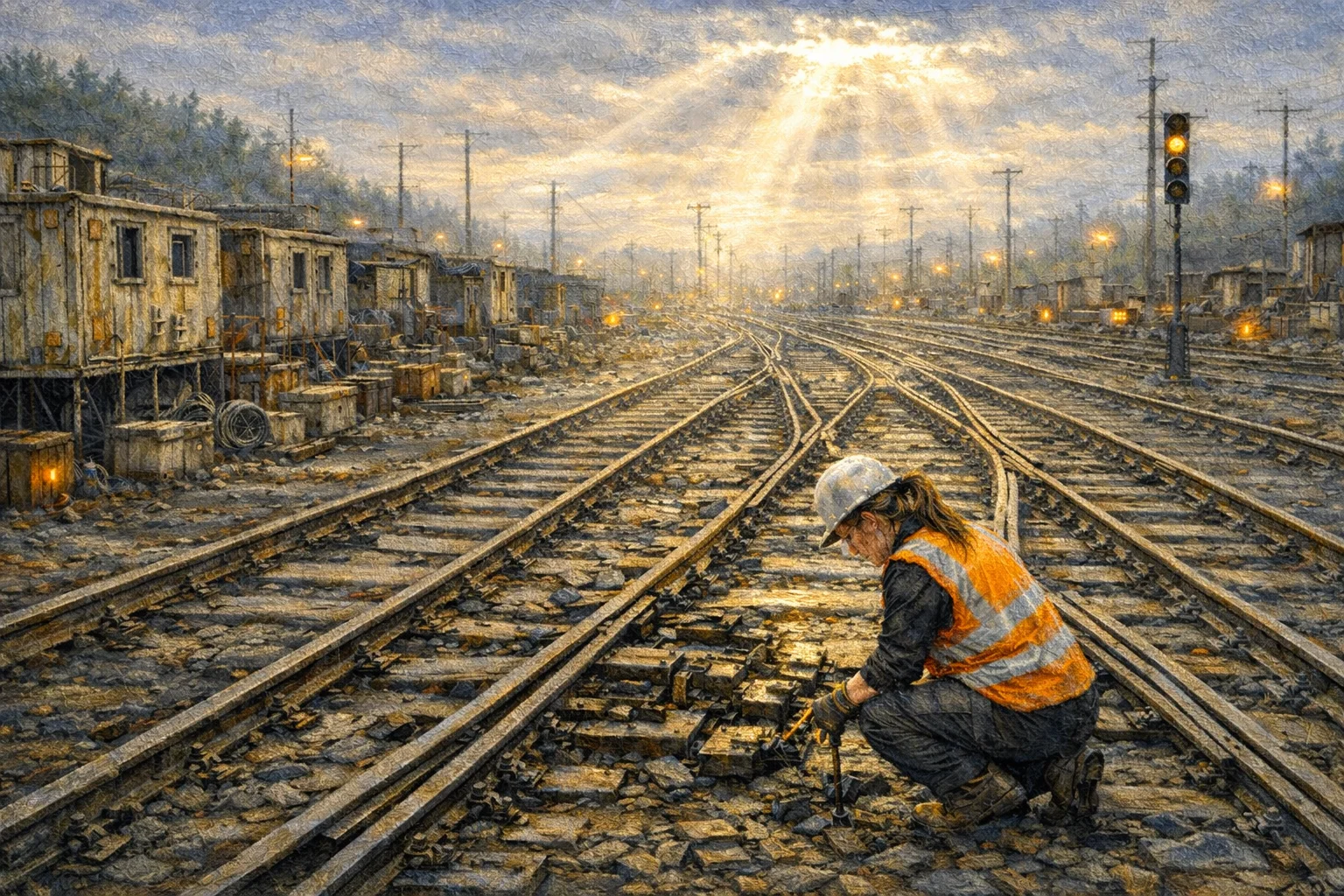
Stability Moved Downstack
Modern career strategy is stuck in a defensive crouch.
We are searching for stability in the one place it no longer resides: the job.
Layoffs arrive during profitable quarters. Entire functions disappear after a software release. A role that felt permanent on Monday can become uncertain by Friday. Yet, the instinct remains unchanged. When volatility rises, professionals begin searching for a “more stable job.”
The tension is simple and uncomfortable.
The job is the most unstable layer of modern work, yet it is where most people anchor their sense of security.
When a role disappears, it feels as though the foundation of a career has collapsed. Titles, teams, and employer brands reinforce the illusion that stability is embedded in the institution.
But the job was never the foundation.
A job is only a temporary container for capabilities.
When Institutions Carried Stability
For much of the past one hundred years, the belief in job stability was rational.
Large institutions were designed around long tenure. Promotion ladders were visible. Industries moved slowly. Workers could expect to remain inside the same organization for decades.
Stability was institutional.
Employment systems reinforced that architecture. Professional identity naturally formed around the employer because the surrounding structure rewarded long affiliation.
That institutional plumbing has largely been removed.
Restructuring is no longer an event. It is the default operating mode. Functions are automated, outsourced, or reorganized before the ink on the job description dries. Skills evolve faster than the roles designed to contain them.
Yet, the cultural narrative never updated.
Professionals still search for the role that will finally feel secure. They scan industries, company reputations, and titles as if stability were embedded inside the position itself.
It rarely is.
Jobs are rented. Capabilities are owned.
Why the Job Captures Our Attention
If jobs are so unstable, why do they still feel like the center of professional life?
Because they are the most visible interface of the system.
Titles appear in email signatures and professional profiles. Performance reviews evaluate behavior within a specific role. Promotions change the label on the container. Job loss removes the label instantly.
Modern employment concentrates attention on the job layer.
This visibility creates a distortion. The job becomes the story people tell about who they are professionally.
When someone asks what you do, the answer is a title.
But the title is only the surface.
Underneath the job sits a deeper infrastructure. Skills developed through years of work. Professional judgment shaped by difficult decisions. Networks formed across organizations. Credibility accumulated through contributions delivered in many contexts.
That infrastructure does not disappear when the job changes.
Jobs change. Capabilities endure.
The Stability Hierarchy
To understand where stability lives, modern work must be viewed as a layered system rather than a single object.
At the surface sits the job. The job is the interface layer. It is the most visible component of professional life and also the most volatile. Organizations control jobs and can redesign or eliminate them whenever priorities shift.
Beneath the job sits the career. A career is the trajectory formed by many roles over time. It carries more continuity than a single position because it reflects a pattern of value rather than a single assignment. Careers evolve through transitions, promotions, and lateral moves. They are less volatile than jobs, but still shaped by markets, leadership decisions, and technological change.
At the deepest layer sits the capability system. This is the infrastructure that allows a professional to produce value across many jobs. Skills, professional judgment, learning velocity, reputation, and relationships all live here. These assets travel with the individual regardless of employer or title, which makes this layer fundamentally more durable than the roles built on top of it.
Volatility is a surface layer phenomenon. Stability is a property of the substrate.
Jobs change frequently. Careers evolve gradually. Capabilities persist.
Container Fallacy
One of the most persistent misconceptions in modern work is the belief that stability comes from protecting the container.
Professionals try to reduce uncertainty by finding the safest employer or the most stable industry. Containers are easy to compare, which makes them feel like a logical place to search for security.
But the strategy misreads where risk lives.
A stable company does not guarantee a stable role. Corporate priorities shift. Technology alters workflows. New leadership reorganizes teams. The container can dissolve even when the organization remains healthy.
The reverse dynamic reveals where real resilience exists.
A professional with a strong capability system can experience several job changes without losing fundamental stability. The container fails, but the engine continues producing value.
This is why two people can experience the same layoff in completely different ways.
One experiences a collapse of stability.
The other experiences a transition between containers.
Their capabilities travel with them.
The Capability System
Stability in modern work emerges from the system beneath the role.
Capabilities function as professional infrastructure. They are the assets that travel with an individual regardless of employer, title, or organization. While a job is controlled by an institution, capabilities remain under the control of the professional who developed them.
Skills are the most visible layer of this infrastructure. Technical knowledge, problem solving ability, communication, and leadership all determine how effectively someone can contribute within a role. But a capability system extends beyond skills alone.
Attention capacity determines whether someone can continue learning and adapting as environments evolve. Credibility determines whether others trust their judgment and are willing to rely on their work. Networks influence access to opportunities that never appear in public listings.
These elements reinforce one another over time.
Skills produce outcomes.
Outcomes generate credibility.
Credibility expands relationships.
Relationships surface new opportunities where capabilities can be applied again.
The system compounds through contribution.
Each successful outcome strengthens the professional signal attached to an individual. Over time, those signals accumulate into something more durable than any single role: a record of capability recognized by others.
In effect, every professional is building a kind of credibility ledger. Each project completed, decision made, and problem solved adds another entry to that record.
A job may disappear.
The system that produced value inside that job remains.
Designing Stability Instead of Searching for It
Once work is understood as a layered system, the search for stable jobs begins to matter less than the deliberate design of durable capabilities.
The question changes.
Instead of asking which job will remain safe, a more useful question emerges.
Which capabilities will continue generating value across many possible jobs?
Some capabilities age quickly. Others remain durable across industries and technologies.
Professional judgment compounds.
Clear communication travels across domains.
The ability to learn new systems becomes more valuable as tools evolve faster.
These capabilities create optionality.
Optionality is one of the most reliable forms of stability available to modern workers. When someone can operate effectively in multiple environments, the loss of one job becomes less threatening.
Careers begin to behave less like ladders and more like evolving portfolios built on the same underlying infrastructure.
The Structural Shift in Where Stability Lives
The modern worker senses that the old promise of job stability no longer matches reality.
Layoffs, rapid reorganization, and technological disruption all signal the same underlying shift.
Stability has not disappeared.
It has moved.
Institutions once carried much of the burden of professional security. Employers provided the continuity that allowed people to organize their lives around a single company or industry.
Today, much of that burden has migrated to the individual capability system.
That shift creates pressure and possibility.
It demands investment in personal infrastructure rather than reliance on institutional permanence. But it also means stability no longer depends entirely on decisions made inside a corporate boardroom.
Stability is not a property of the job.
It is a property of the capability system beneath it.
Where Stability Lives
Once work is understood as a layered system, the search for stable jobs begins to look misplaced.
The job was never designed to carry the full weight of professional stability. It is a temporary container controlled by an organization whose priorities can change overnight. When people anchor their sense of security to that job, every restructuring or layoff feels existential.
But when stability is anchored deeper in the system, disruption changes character. A job loss remains difficult, yet it no longer represents the collapse of the foundation. It becomes a transition within a continuing career.
This is why two professionals can experience the same layoff in completely different ways. One experiences the loss of stability. The other experiences the end of a role within a continuing career.
Their capabilities travel with them.
Over time, every career is tested by events that reveal where stability is actually anchored. Layoffs, reorganizations, technological shifts, and market cycles function as unplanned audits of the professional system beneath the role. They expose whether stability was tied to the job or to the infrastructure that produces value regardless of the job.
The real question modern workers face is not about the safety of the current job.
It is about the durability of the system underneath it.
If the job disappears tomorrow, what remains intact? Which capabilities still generate value in the next environment? Which relationships recognize that value? Which reputation carries forward into the next opportunity?
Those answers determine whether disruption becomes collapse or transition.
Stability has not disappeared from modern work. It has moved downward in the stack. Institutions once carried most of the burden, allowing people to organize their lives around a single employer. Today, that burden sits closer to the individual.
The job is temporary. The career evolves. The capability system endures.
And that is where stability lives.
Join Owesa Signal
A newsletter for the modern worker.
It is a concise weekly pulse that surfaces patterns, tensions, and signals worth attention. It respects time, avoids noise, and favors judgment over volume.